Dec 4, 2025
·
Outdoor Living
The #1 Cause of Patio Failure — and How to Fix It in the Lowcountry
Most contractors talk about pavers, borders, patterns, and colors.
But NONE of that matters unless the drainage is right.
Charleston homeowners deal with:
• heavy summer storms
• sandy and shifting soil
• standing water
• humidity
• downspout flooding
• poor grading from builders
If drainage is wrong, your backyard will fail — no matter how good the materials are.
This guide explains how Charleston drainage works and what to avoid.
1. What Happens When Drainage Is Wrong?
• Pavers shift and sink
• Polymeric sand washes out
• Mosquito breeding zones form
• Water sits against your foundation
• Mold and algae grow rapidly
• Grass dies
• Plants rot
• Rock beds wash out
• Flooding becomes worse over time
In Charleston, poor drainage can ruin a $20,000–$60,000 patio.
2. The 4 Drainage Systems Every Charleston Yard Needs
A. Slope & grading
Every patio must pitch at 1–2% away from the home.
B. Open-graded base (NOT dirt or sand)
Charleston patios should be built on:
• 57 stone
• Geo-fabric
• Stone dust / 789 bedding layer
NEVER on sand.
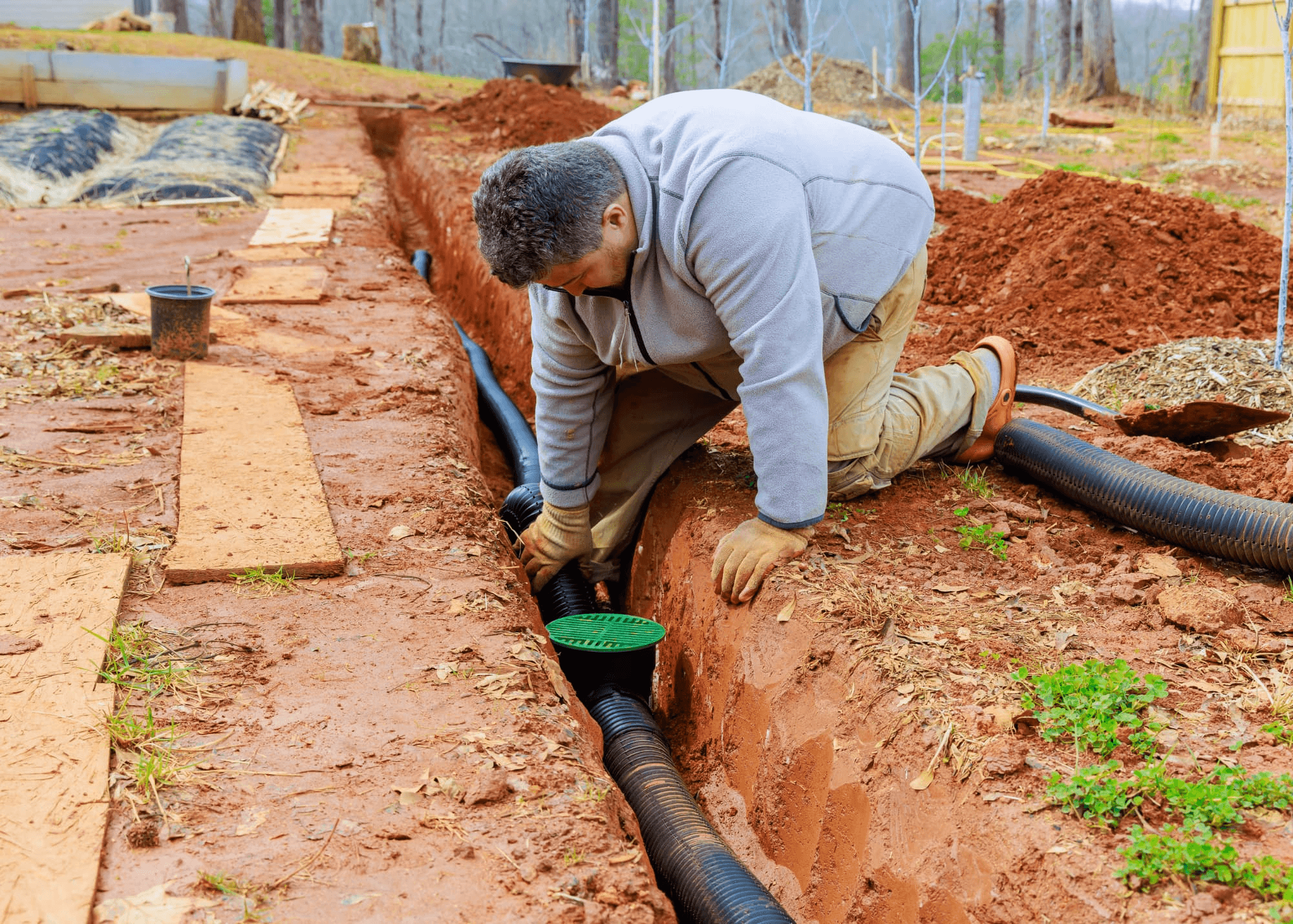
C. French drains
Prevent water from pooling near patios or foundations.
D. Downspout rerouting
90% of water issues come from downspouts with nowhere to go.
3. Why Polymeric Sand Fails in Charleston
Humidity + storms = poly sand disaster.
It:
• hazes
• traps water
• grows mold
• weakens over time
• becomes sticky
• stains pavers
• NEVER fully hardens in Charleston humidity
Use 789 sand or stone dust instead.
4. How to Tell If Your Yard Has Drainage Problems
Look for:
• puddles after 2 hours
• settling or sinking
• mildew on concrete
• insects around wet areas
• dead grass patches
• puddles near foundation
• mulch washing away
• standing water odor
• downspout erosion lines
If you see ANY of these — you need drainage improvements.
5. Real Drainage Solutions for Charleston Yards
Fix #1: Regrading the entire yard
Often required for older homes.
Fix #2: Installing French drains
Ideal for soggy yards or low spots.
Fix #3: Rerouting downspouts underground
This one solves problems instantly.
Fix #4: Adding an open-graded patio base
Prevents sinking and washouts.
Fix #5: Channel drains in heavy water flow areas
6. How Much Does Drainage Cost in Charleston? (Real Pricing)
• Basic downspout reroute: $300–$600
• French drain section: $900–$2,500
• Full-yard French system: $3,500–$7,500
• Regrading: $800–$4,000
• Channel drains: $900–$2,200
7. How Drainage Makes Your Patio Last 20–50 Years
The base + drainage is what gives a patio:
• structural integrity
• stability
• longevity
• resistance to storms
• resistance to shifting soil
Drainage = the foundation of everything.
Need a drainage-first design for your Charleston backyard?
We design outdoor living spaces that LAST — built specifically for the Lowcountry.
Text or call 845-300-5088 to book a drainage-focused consultation.