Dec 7, 2025
·
Outdoor Living
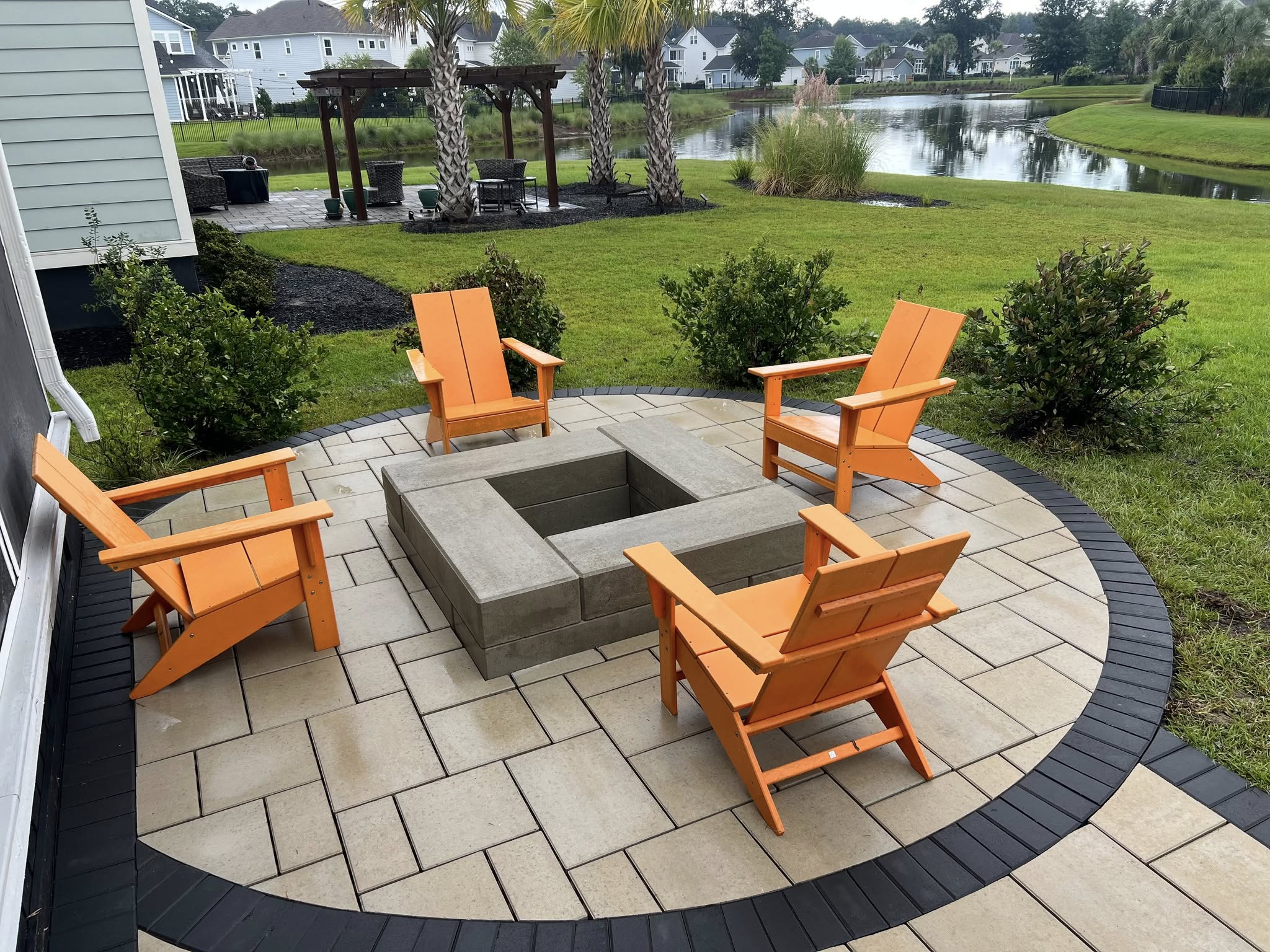
Are Pavers or Concrete Better in Charleston? (Honest Comparison for 2025)
When Charleston homeowners start planning a new patio, driveway, or walkway, the first question they ask is simple:
“Should we go with pavers or concrete?”
On the surface, concrete looks cheaper and easier. Pavers look nicer and last longer.
But when you factor in Charleston’s climate, soil conditions, storms, and humidity — the comparison isn’t even close.
Here’s the honest breakdown.
Charleston’s Climate Makes This Decision Different
Most online articles compare pavers vs concrete in general terms, but Charleston isn’t “general.”
We have:
sandy, shifting soil
constant humidity
heavy rainfall
salt air near the coast
high heat
flooding in many neighborhoods
poorly graded builder lots
These conditions destroy concrete faster than almost anywhere else.
So let’s break down how each option performs specifically in Charleston.
Pavers vs. Concrete in Charleston: Quick Summary
Feature | Pavers | Concrete |
|---|---|---|
Durability | ⭐⭐⭐⭐⭐ | ⭐⭐ |
Cracking Resistance | Won’t crack | WILL crack in this climate |
Drainage | Excellent | Poor |
Repairability | Easy | Full Replacement |
Longevity | 25–50+ years | 3–10 years before major issues |
Coastal/Storm Performance | Strong | okish |
Aesthetics | High-end | Basic |
Cost | Higher upfront | Lower upfront but more repairs |
Why Concrete Fails Faster in Charleston
1. It WILL crack — it’s not “if,” it’s “when.”
Humidity, shifting soil, and storm washouts all cause concrete to expand, contract, and eventually crack.
Pavers flex. Concrete doesn’t.
2. Poor drainage = faster failure
Concrete is one solid slab. Water has nowhere to go.
Pavers allow water to drain through the joints.
3. Repairs look terrible
When concrete cracks, repairs look horrible. With pavers, you simply lift a few stones and re-level — and it looks perfect again.
4. Heat & salt degrade concrete surfaces
Charleston summers + salt air = faster surface breakdown.
You’ve probably seen driveways with flaking, popping, or sandy surfaces — that’s exactly what happens.
Why Pavers Are the Better Choice for Charleston Homes
1. They don’t crack
Pavers are individual pieces.
When the ground moves, the system flexes.
Concrete? It cracks.
2. Easy to repair if needed
If something settles over time (common in Charleston), we pull the pavers, fix the base, and relay them.
It looks brand new.
3. Superior drainage
Stormwater moves through the joints or across the surface without undermining the structure.
4. Way longer lifespan
Most Charleston paver patios last 25–40 years with proper installation.
Concrete lasts 3–10 years before major cracking.
5. Higher-end appearance
Charleston loves clean, coastal-modern aesthetics.
Pavers achieve that effortlessly.
6. Increases home value
Concrete offers almost no value bump.
Pavers absolutely do.
7. Perfect for Charleston architecture
Whether you’re in:
Mount Pleasant
West Ashley
James Island
Johns Island
daniels island
Summerville
Downtown Charleston
folly beach
Pavers complement the home style better than concrete.
Cost Comparison: Pavers vs. Concrete in Charleston
Concrete
🟢 Cheaper upfront ($12–$18/sq ft)
🔴 Very expensive over time
🔴 Repairs look bad
🔴 Likely to crack quickly
Pavers
🟢 Higher upfront ($28–$55/sq ft)
🟢 Much lower long-term cost
🟢 Extremely durable
🟢 Easy to maintain
🟢 No cracking
Pavers typically cost more Day 1…
but save thousands over the next 10–20 years.
If you factor long-term ROI, pavers almost always end up cheaper than concrete.
What About Large Modern Slabs vs Concrete?
If you love the look of poured concrete, you should actually consider:
Techo-Bloc Blu Grande
Belgard Dimensions 12
Unilock Umbriano slabs
Porcelain pavers
These give you the clean, modern aesthetic without the cracking risk.
So, Which One Should You Choose?
If you want:
🔹 Something cheap for a few years → Choose concrete
…but expect cracks, repairs, and disappointment.
🔹 Something that lasts decades → Choose pavers
Especially in Charleston’s climate, it’s not even a fair fight.
Pavers win in:
durability
drainage
maintenance
appearance
longevity
resale value
They’re simply the smarter investment.
Final Thoughts
Concrete fails fast in Charleston, honestly everywhere.
Pavers hold up, look better, and offer real long-term value.
If you’re planning a patio, walkway, driveway, or full backyard remodel, choose the option that’s built for this climate — and built to last.
Ready to Upgrade Your Charleston Backyard?
At No Pressure Contracting, we specialize in drainage-first, design-driven paver installations built for the Lowcountry.
📲 Text or call 845-300-5088
to book a design consultation.